About Us
- Home
- About Us
WHAT IS FACIAL FAT GRAFTING?
Facial fat grafting is a precise surgical technique using your own refined fat to restore areas of age-related volume loss and enhance overall facial harmony.
Mr Orfaniotis incorporates fat grafting into his deep-plane facelifts to achieve a more natural, balanced and long-lasting rejuvenation. Autologous fat is harvested gently, processed with advanced technology to preserve growth factors, and re-injected into specific anatomical compartments where it integrates predictably.
His work blends artistry with anatomical precision to deliver dramatic yet harmonious rejuvenation. From sharp jawlines to youthful contours, his procedures help patients feel restored, confident, and completely themselves.
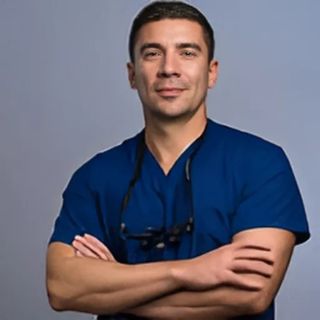
Georgios Orfaniotis
MD, FRCS(Plast)
Restores soft, natural facial volume
Enhances cheek, temple, jawline and periorbital contours
Improves skin texture through the regenerative components of nanofat
Long-lasting results, with surviving fat behaving like native tissueSeamlessly complements deep-plane facelift outcomesThis approach avoids the “overfilled” appearance associated with synthetic fillers and contributes to a more youthful, structural restoration.
Ideal for patients with volume loss in the cheeks, midface, periorbital region, temples, chin or perioral areas.
Mr Orfaniotis performs fat grafting exclusively in combination with a deep-plane facelift, where repositioning of the deeper tissues provides the most reliable platform for long-term fat survival and a harmonious result.
Low-pressure harvesting to maximise cell viability
Advanced processing that preserves regenerative growth factors while removing unwanted components
Precise refinement into microfat (structural volume) or nanofat (skin quality enhancement)
Compartment-based injection into defined deep and superficial planes, guided by detailed anatomical knowledge and vascular safety
This refined approach has led to consistently predictable fat survival, typically 50–70%, depending on individual metabolic and lifestyle factors.
Microfat (Volume Restoration)
Cheeks & midface
Malar projection / zygoma
Periorbital hollowing
Temples
Chin & pre-jowl sulcus
Jawline
Nanofat (Skin Quality)
Periorbital fine lines and lower eyelid texture
Upper lip / perioral lines
Buccal and lower face fine wrinkling
Fat is gently harvested from the lower abdomen or thighs, processed using advanced equipment to preserve viable cells and regenerative components, refined to the appropriate size, and injected into specific facial compartments.
This is performed during your deep-plane facelift to optimise accuracy, integration and aesthetic balance.

Swelling and mild bruising are expected and usually settle over the first 2–3 weeks.
Final results evolve over 6–12 weeks as the grafted fat stabilises. Surviving fat at three months is generally long-lasting.
Natural, soft and durable volume restoration
Improved skin quality in treated areas
Typically 40–70% fat retention
Results remain stable with a consistent weight and healthy lifestyle
While generally very safe, potential risks include bruising, swelling, temporary asymmetry, uneven resorption, irregularities, lumps or small oil cysts.
Vascular complications are extremely rare and minimised through meticulous, compartment-based injection and detailed anatomical knowledge.
Avoid pressure on grafted areas
Maintain stable weight
Follow the OPS post-operative protocol
Red-light therapy, lymphatic drainage and HBOT (via Monrose London) are offered to enhance healing
Ensure adequate diet, including protein supplementation as advise
Is fat grafting permanent?
Surviving fat becomes living tissue and lasts for years.
Will I look overfilled?
No — the aim is subtle restoration, not exaggerated augmentation.
Why is it only performed with a facelift?
Fat integrates most predictably when the facial foundation has been restored with a deep-plane lift.
WHY CHOOSE FAT GRAFTING?
Restores soft, natural facial volume
Enhances cheek, temple, jawline and periorbital contours
Improves skin texture through the regenerative components of nanofat
Long-lasting results, with surviving fat behaving like native tissueSeamlessly complements deep-plane facelift outcomesThis approach avoids the “overfilled” appearance associated with synthetic fillers and contributes to a more youthful, structural restoration.
WHO IS A SUITABLE CANDIDATE?
Ideal for patients with volume loss in the cheeks, midface, periorbital region, temples, chin or perioral areas.
Mr Orfaniotis performs fat grafting exclusively in combination with a deep-plane facelift, where repositioning of the deeper tissues provides the most reliable platform for long-term fat survival and a harmonious result.
WHAT MAKES MR ORFANIOTIS’ TECHNIQUE DISTINCT?
Low-pressure harvesting to maximise cell viability
Advanced processing that preserves regenerative growth factors while removing unwanted components
Precise refinement into microfat (structural volume) or nanofat (skin quality enhancement)
Compartment-based injection into defined deep and superficial planes, guided by detailed anatomical knowledge and vascular safety
This refined approach has led to consistently predictable fat survival, typically 50–70%, depending on individual metabolic and lifestyle factors.
AREAS COMMONLY TREATED
Microfat (Volume Restoration)
Cheeks & midface
Malar projection / zygoma
Periorbital hollowing
Temples
Chin & pre-jowl sulcus
Jawline
Nanofat (Skin Quality)
Periorbital fine lines and lower eyelid texture
Upper lip / perioral lines
Buccal and lower face fine wrinkling
TECHNIQUE OVERVIEW
Fat is gently harvested from the lower abdomen or thighs, processed using advanced equipment to preserve viable cells and regenerative components, refined to the appropriate size, and injected into specific facial compartments.
This is performed during your deep-plane facelift to optimise accuracy, integration and aesthetic balance.
RECOVERY
Swelling and mild bruising are expected and usually settle over the first 2–3 weeks.
Final results evolve over 6–12 weeks as the grafted fat stabilises. Surviving fat at three months is generally long-lasting.
RESULTS & LONGEVITY
Natural, soft and durable volume restoration
Improved skin quality in treated areas
Typically 40–70% fat retention
Results remain stable with a consistent weight and healthy lifestyle
RISKS
While generally very safe, potential risks include bruising, swelling, temporary asymmetry, uneven resorption, irregularities, lumps or small oil cysts.
Vascular complications are extremely rare and minimised through meticulous, compartment-based injection and detailed anatomical knowledge.
AFTERCARE
Avoid pressure on grafted areas
Maintain stable weight
Follow the OPS post-operative protocol
Red-light therapy, lymphatic drainage and HBOT (via Monrose London) are offered to enhance healing
Ensure adequate diet, including protein supplementation as advise

FREQUENTLY ASKED QUESTIONS
Is fat grafting permanent?
Surviving fat becomes living tissue and lasts for years.
Will I look overfilled?
No — the aim is subtle restoration, not exaggerated augmentation.
Why is it only performed with a facelift?
Fat integrates most predictably when the facial foundation has been restored with a deep-plane lift.